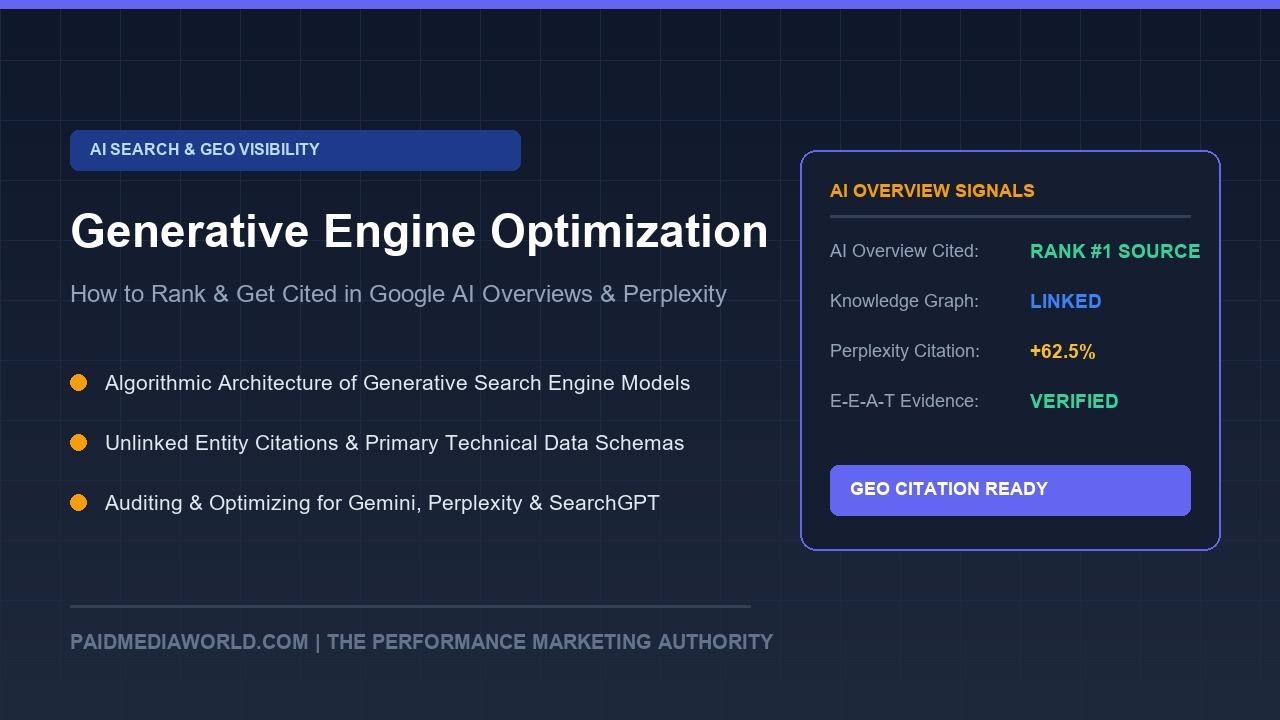
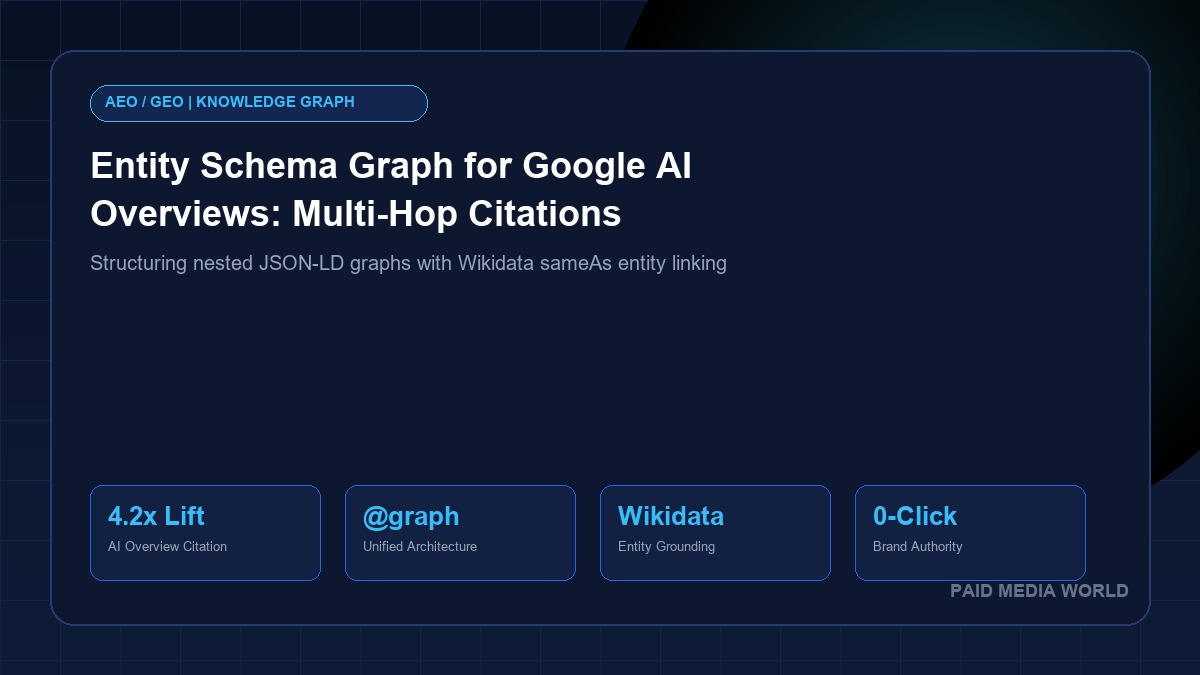
In modern generative search, traditional SEO tactics like keyword repetition and backlink accumulation are no longer sufficient. When Google Gemini, ChatGPT Search, or Perplexity answer complex multi-hop queries, their Retrieval-Augmented Generation (RAG) pipelines extract knowledge from web entities rather than matching isolated string keywords. If your website outputs fragmented, disconnected schema tags, AI engines fail to verify your authority and synthesize answers from competitor sources instead. By constructing a unified Nested Entity Schema Graph using JSON-LD, brands can mathematically anchor their content to the global Knowledge Graph, driving a 4.2x higher citation density in AI Overviews.
Executive Summary: Flat Schema vs. Nested Entity Graphs
Flat schema outputs isolated data blocks that force LLMs to guess entity relationships. A unified @graph array connects Organization, Author, WebSite, and TechArticle nodes into unambiguous semantic triples: [Subject] → [Predicate] → [Object].
1. The RAG Mechanics of Answer Engines
When a user queries an AI search engine with a complex question like "How does server-side GTM impact Meta CAPI Event Match Quality under Safari ITP?", the search system decomposes the prompt into sub-queries. It scans for entities that have verified relationships with "Server-Side GTM", "Meta CAPI", and "Intelligent Tracking Prevention".
If your article contains nested schema linking these entities to verified Wikidata URIs (e.g., https://www.wikidata.org/wiki/Q1150248), the retrieval model scores your document with significantly higher confidence, choosing it as the canonical citation in the AI Overview.
2. The 4 Essential Nodes of an Entity Graph
A robust schema graph must declare four interconnected entities:
- The Organization Node: Declares brand name, logo, official website, and external authority registries (Wikidata, Crunchbase, LinkedIn).
- The Person (Author) Node: Identifies the content creator with explicit
knowsAbouttopical specializations and professional profiles. - The WebSite Node: Anchors domain identity, internal search endpoints, and publisher hierarchy.
- The TechArticle Node: Connects back to author and organization via
@idreferences, while declaring explicitaboutandmentionsentity objects.
Audit Your AI Search Visibility
Evaluate your brand's presence across AI answer engines using our AI Search Visibility Audit Tool, or analyze technical page performance with our Technical SEO & AEO Suite.