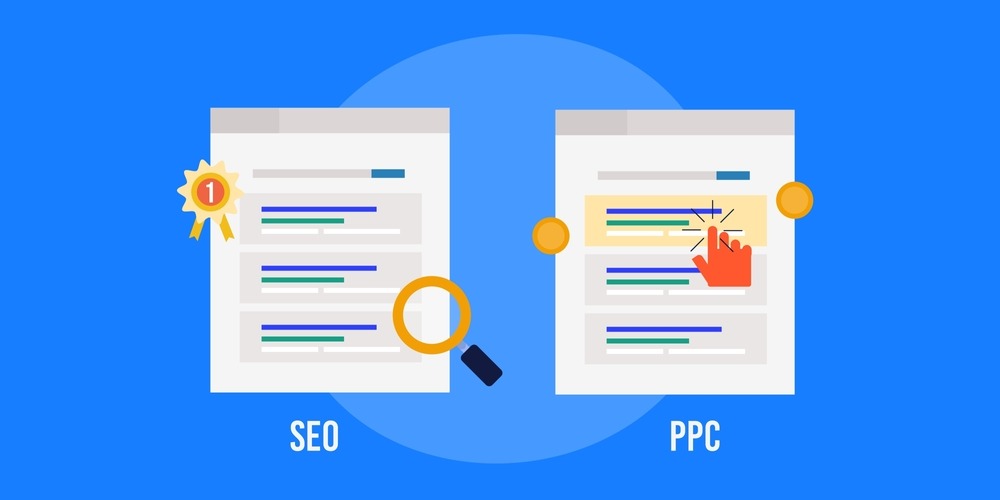
For any business owner in India, the most fundamental marketing debate is: “Do I focus on SEO or PPC?”
One promise you “Free traffic” that takes months to arrive (SEO), while the other promises “Instant traffic” but charges you for every single click (PPC). In 2026, with the rise of AI-driven search engines like Google Gemini and OpenAI’s SearchGPT, the old “SEO vs. PPC” rivalry has changed. It is no longer about choosing one; it is about knowing when to wait for the garden to grow and when to just buy the flowers.
1. SEO: The Long-Term Wealth Builder (The Garden)
SEO (Search Engine Optimization) is the process of making your website so authoritative and user-friendly that Google recommends you for free.
- The Advantage: Once you rank at the top, the traffic is essentially free. This builds long-term equity for your brand. In 2026, SEO focus has moved from “matching keywords” to GEO (Generative Engine Optimization)-ensuring your brand’s expertise is cited by AI answers.
- The Downside: It is slow. For a competitive term in a metro city (e.g., “Best Orthodontist in Mumbai”), it can take 6-12 months of consistent content and link-building to see meaningful results. You are “planting seeds” and waiting for the harvest.
2. PPC: The Scalable Growth Engine (Buying the Flowers)
PPC (Pay-Per-Click) is the process of buying your way to the top of the search result instantly.
- The Advantage: Speed and Predictability. If you want leads *today*, you turn on Google Ads or Meta Ads. If you manage it correctly, you know exactly how much ₹ you need to spend to generate ₹5x in revenue.
- The Downside: The moment you stop paying, the traffic disappears. It is not an asset you own; it is an engine you must constantly refuel with capital.
3. The 2026 Comparison Matrix
| Feature | SEO (Organic) | PPC (Paid) |
|---|---|---|
| Traffic Speed | Slow (Months). | Instant (Minutes). |
| Cost Complexity | High upfront effort (Content/PR). | Ongoing budget (Auction based). |
| AI Search Impact | High (Requires GEO citations). | Moderate (PMax handles AI placement). |
4. The “Hybrid” Strategy: When to Use Which?
At Paid Media World, we don’t recommend one over the other. We recommend a Synchronized Approach.
Step 1: Use PPC for “Discovery” and “Validation”
If you have a new product, use PPC for 30 days. This will tell you exactly which keywords actually result in sales. Don’t guess. Let the data from your paid ads tell you where the money is.
Step 2: Invest SEO into the Winning Keywords
Once you’ve found the 5-10 keywords that drive your highest-intent customers via PPC, start your long-term SEO work on those specific terms. This ensures that in 12 months, you won’t have to keep paying Google for the clicks you’ve already validated as profitable.
The lines are blurring. Google’s AI now uses your “Organic Content Quality” (E-E-A-T) to determine your “PPC Ad Quality Score.” If your website content is poor for SEO, your paid ads will actually become more expensive.
Conclusion
SEO is your long-term insurance policy; PPC is your short-term growth driver. The most successful Indian brands in 2026 lead with PPC to capture immediate demand and follow with SEO to build permanent authority.
Unsure where to allocate your first ₹1 Lakh? Connect with our growth team. We provide a cross-channel audit that shows you exactly when to plant the garden and when to just buy the flowers.

Leave a Reply