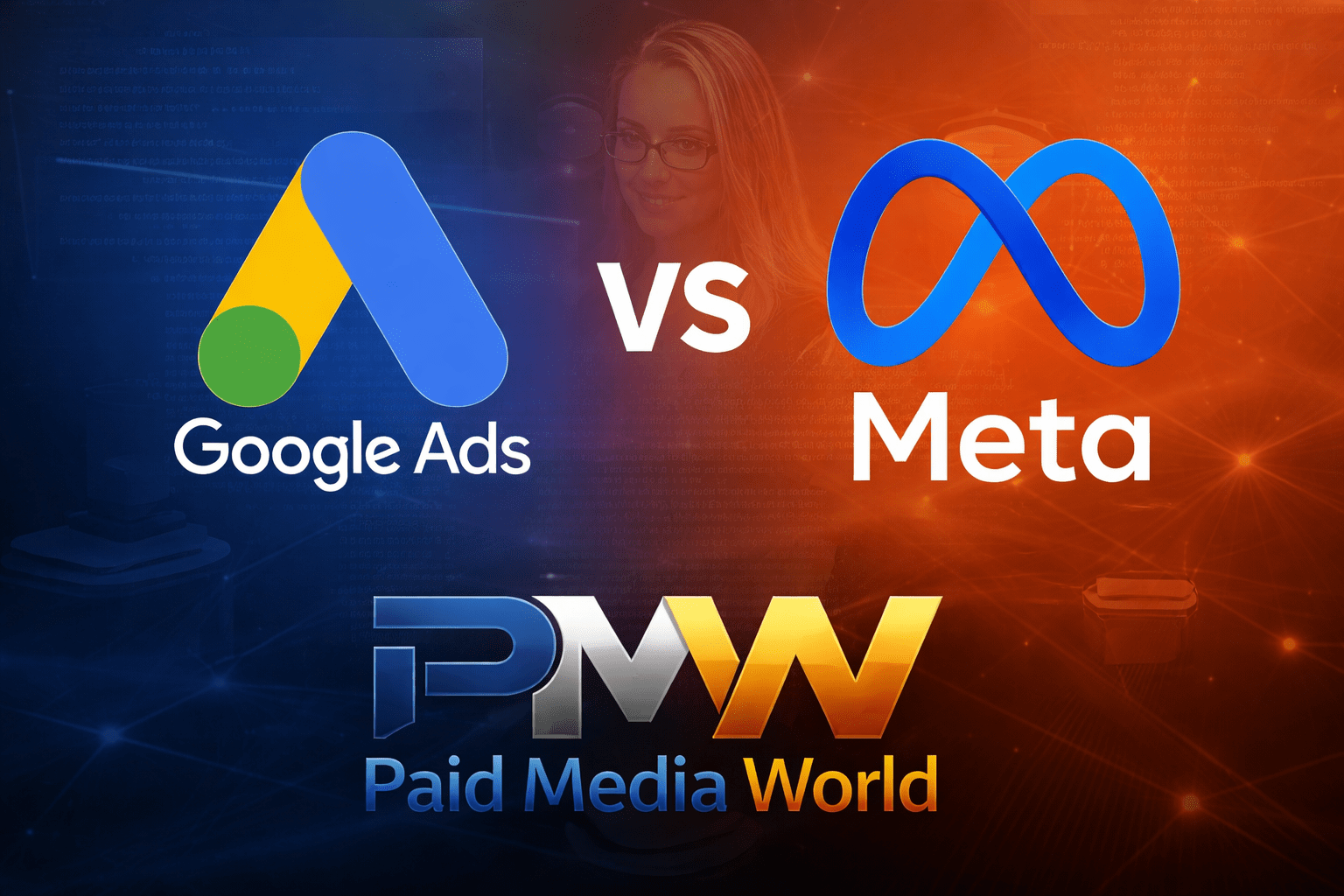
One of the most frequent questions we hear from founders in Bangalore, Gurgaon, and Mumbai is: “Should I spend my first ₹1 Lakh on Google or Meta?”
For an Indian startup, capital is often finite, and the pressure to show immediate traction is immense. Choosing the wrong platform at the launch stage can burn your runway without providing the necessary data to pivot. In 2026, the answer is no longer a simple “either/or.” It is about understanding the difference between Intent and Discovery.
In this guide, we break down the definitive 2026 framework for Indian startups to decide where to allocate their first marketing rupees.
1. Google Ads: The ROI of Active Intent
Google is where people go when they have a problem and are looking for a solution. It is the platform of Demand Capture.
- When to choose Google first: If you sell a product or service that people are *already* searching for. For example, if you are a “cloud-based HR payroll software for Indian SMEs,” people are already searching for that. Bidding on these keywords is the fastest path to qualified leads.
- Google Advantage 2026: With Performance Max (PMax), you can reach users across the entire Google ecosystem (Search, YouTube, Gmail) with a single campaign. For startups, this means you can capture intent and build awareness simultaneously.
2. Meta Ads: The Power of Social Discovery
Meta (Facebook & Instagram) is where people go to be entertained. It is the platform of Demand Generation.
- When to choose Meta first: If you have a “new-to-market” product that people don’t know exists yet. For example, a uniquely designed eco-friendly bamboo t-shirt brand. Nobody is searching for “bamboo t-shirts” yet, so Google Ads will have low volume. Meta allows you to show the product to your target demographic and manufacture the demand.
- Meta Advantage 2026: WhatsApp integration. For Indian startups, driving traffic directly to a WhatsApp chat allows for immediate, high-trust sales conversations that bypass the friction of a complex website.
3. The “Platform Wars” Comparison Matrix
| Feature | Google Ads (Search/PMax) | Meta Ads (FB/IG) |
|---|---|---|
| User Mindset | Solving a specific problem. | Passive scrolling/Discovery. |
| Cost (CPC) in India | Moderate to High (Auction based). | Low to Moderate. |
| Conversion Speed | Fast for high-intent queries. | Slower (Requires retargeting). |
4. The Indian Reality: Trust & Payment Friction
Regardless of the platform, Indian startups face two unique 2026 hurdles: Trust and UPI Conversion.
If you choose Meta, your “Creative” (the video or image) must do all the heavy lifting to prove you aren’t a scam. If you choose Google, your landing page must load instantly. In both cases, if your checkout doesn’t have a 1-click UPI option (GPay, PhonePe), your conversion rate will drop by 60%.
In 2026, we tell our startup clients: “Don’t pick one.” Spend 70% of your budget on Google Search to capture the people who want to buy *today*. Spend the remaining 30% on Meta Retargeting. This ensures that when someone searches for you on Google but doesn’t buy, they see your authoritative video testimonial on Instagram the next day. This hybrid approach is the most cost-effective way to scale.
Conclusion
The “winner” depends on your product’s Search Maturity. Google captures demand; Meta creates it. Start with Google if people are looking for you; start with Meta if they don’t know they need you yet.
Are you an Indian founder struggling to allocate your first marketing budget? Connect with our startup growth team for a free audit of your product-market fit on paid channels.


Leave a Reply